Hand of Nurse Performing Nasal Swab Test: A Versatile Design Asset for Creative and Professional Workflows
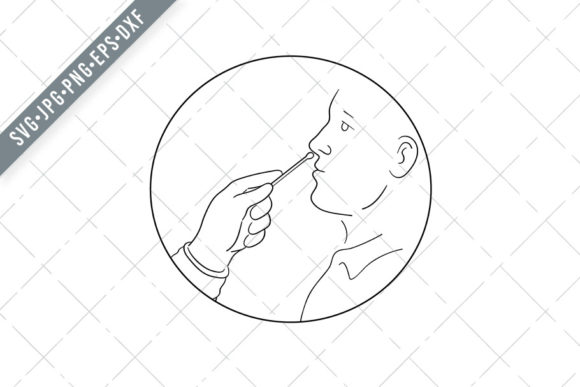
In the current landscape of health awareness and medical communication, visual assets that convey clinical procedures clearly and respectfully are in high demand. The Hand of Nurse Performing Nasal Swab Test design set meets this need with a clean, monoline black-and-white illustration that captures a precise medical moment. This SVG-based resource is built for creators, educators, small business owners, and marketers who need professional-grade graphics for a wide range of projects. Whether you are designing awareness campaign materials, creating educational content, or producing branded merchandise, this asset set provides a dependable foundation that fits smoothly into existing workflows.
What This Design Asset Set Includes and Why It Matters
The set delivers a line drawing illustration of a medical worker's hand performing a nasopharyngeal swab test, rendered in a consistent monoline style. This simplicity makes the graphic adaptable across many contexts without losing its clinical clarity. The zip download contains five file formats: SVG vector file for use with Silhouette Studio Cameo, Cricut, and similar cutting machines; PNG at 300 dpi with a minimum size of 10 inches; DXF for CAD-like applications; EPS for professional design software; and JPG for quick previews or low-resolution needs. Having all these formats in one download removes the friction of conversion and ensures you have exactly what your workflow demands, whether you are cutting vinyl, printing on fabric, or laying out a digital flyer.
The choice of a monoline, black-and-white style is deliberate. It prints cleanly on any substrate, scales without loss of quality, and integrates easily into colored backgrounds or textured materials. This makes the asset suitable for both digital and physical projects without requiring additional editing. The illustration itself focuses on the hand and the swab, which keeps the visual centered on the procedure rather than the person, lending itself to applications where neutrality and professionalism are important.
Integrating the Nasal Swab Test Illustration into Your Creative Workflow
Incorporating this asset into your project pipeline is straightforward. If you work with vector design software such as Adobe Illustrator, Inkscape, or CorelDRAW, the SVG or EPS files open directly on your artboard, ready for resizing, recoloring, or combining with other elements. For those using cutting machines like Cricut or Silhouette Cameo, the SVG and DXF formats import natively into the respective design spaces, allowing you to set cut lines, adjust scale, and prepare files for vinyl, cardstock, or iron-on transfers in minutes.
One practical approach is to treat the illustration as a modular component. Because it is a single, well-defined line drawing, you can layer it with text, icons, or background shapes without visual clutter. For example, you might pair it with a simple phrase like "Get Tested" for a public health poster, or combine it with other medical icons to build a cohesive set of informational graphics. The monoline style ensures consistency across multiple assets, which is especially valuable when creating a series of materials for a campaign or educational module.
When preparing files for production, start by opening the SVG in your preferred software and confirming that all paths are closed and scaling is set to your intended output size. If you plan to cut the design on a vinyl cutter, perform a test cut on scrap material first to verify that the line thickness and detail level work with your blade settings. For printing, the high-resolution PNG (300 dpi at minimum 10 inches) gives you a reliable raster option that can be placed directly into document layouts or uploaded to print-on-demand platforms without further processing.
Practical Use Cases Across Different Projects
This design asset is not limited to one type of project. Its versatility becomes clear when you consider the range of applications that benefit from a clear, professional medical illustration. Below are several real-world scenarios where the Hand of Nurse Performing Nasal Swab Test graphic can add value to your work.
T-shirts and Apparel
For clothing designers or small apparel brands, the SVG format makes it simple to create heat-transfer vinyl designs. The monoline black-and-white style works well on light or dark garments when paired with the right vinyl color. You can scale the illustration to fit a pocket-sized print or a larger center-chest design. Because the line art is clean, it also layers nicely with text or other graphics without becoming muddy.
Mugs and Drinkware
Mug printing typically requires a single-color design for sublimation or screen printing. The hand-and-swab illustration is ideal for this medium because it reads clearly at a small scale and fits well within a standard print area. Use the PNG file to position the graphic on a mug template, or cut vinyl for a stencil if you are working with etching cream or paint.
Stencils for Wall Art and Fabric
The DXF or SVG formats allow you to prepare a stencil for painting on walls, fabric, or wood. Because the design uses open lines and distinct shapes, it cuts cleanly in stencil material (such as mylar or adhesive vinyl). This is particularly useful for creating large-scale wall graphics in clinics, pharmacies, or educational spaces where a clear visual message is needed.
Greeting Cards and Stationery
For card makers and stationery designers, the illustration can be printed, embossed, or cut as a layered card element. Pair it with a simple "Thank You" or "Get Well" message for a unique medical-themed card. The monoline style keeps the design elegant and readable, even in small card formats.
Banners, Posters, and Educational Displays
For educators, public health communicators, and marketers, the PNG or EPS file works directly in layout software like Canva, Adobe InDesign, or PowerPoint. Use the graphic as a central visual for a poster explaining testing procedures, or as part of a larger infographic. The high-resolution PNG ensures sharp printing at sizes up to 20 inches or larger without pixelation.
Patterns for Scrapbooking, Cards, and Digital Backgrounds
If you create patterns for scrapbooking, party invitations, or digital backgrounds, the SVG can be tiled or duplicated in a pattern fill. Because the illustration is monoline, it forms a clean repeating design that does not overwhelm the page. This is a subtle way to incorporate medical themes into scrapbook layouts, event materials, or packaging without making the message too literal.
Party Invitations and Accessories
For events like medical school graduations, nursing appreciation parties, or health awareness fundraisers, the illustration can be used on invitations, thank-you tags, and party favor bags. The black-and-white style pairs easily with any color scheme, and the vector format allows you to scale it to fit any paper size or accessory shape.
How the Asset Interacts with Design Software and Cutting Machines
The value of this asset set lies in its compatibility with the tools you already use. SVG files are the standard for web and cutting machine workflows. They open natively in Cricut Design Space, Silhouette Studio, and Brother ScanNCut software. EPS files are preferable for professional print designers working in Adobe Suite because they preserve vector paths and allow unlimited scaling. DXF files are widely used in architecture, engineering, and certain CNC workflows, making the asset accessible to a broader range of makers. The PNG and JPG formats cover quick needs where vector editing is not required, such as placing the image into a Google Doc, PowerPoint slide, or social media post.
When moving between software, keep an eye on stroke width. SVGs often preserve the stroke properties set by the original designer, but when you open a DXF or EPS in a different program, stroke weights may default to a thin line. Adjust the stroke thickness in your software to match your intended output, especially for cut projects where a thicker line ensures the machine cuts through the material reliably. For print, a standard stroke weight of 0.5 to 1 point ensures legibility at small sizes.
Tips for Preparing and Organizing Your SVG Files for Efficient Work
Efficiency starts with proper file management. When you unzip the download, create a dedicated folder for the asset and rename the files to something descriptive such as "NurseSwabTest_Hand_SVG" rather than leaving generic names. This makes it easier to locate the right format when you are in the middle of a project. If you work with multiple assets, consider using a digital asset management tool or simply a consistent naming convention across your library.
Before importing into your design software, check that the file dimensions match your intended output scale. The asset is sized at a minimum of 10 inches in the PNG version, but the SVG and EPS formats are resolution-independent and can be scaled up or down without quality loss. For cutting machines, ensure the design fits within your cutting mat boundaries before sending it to the machine. For print, confirm that your document DPI matches the asset's 300 dpi to avoid accidental downsampling.
One practical workflow tip: keep a master copy of the SVG in its original state, and only work on duplicates. This way, if you need to return to the original line art for a different project, you do not have to recreate it from a modified version. This is especially useful when you are experimenting with color fills, pattern overlays, or combination with other graphics.
Quality Control and Long-Term Usability of the Asset Set
A well-made SVG file should have clean paths, no stray anchor points, and consistent stroke settings. Before using the asset in production, open the SVG in a vector editor and zoom in to inspect the lines. Look for any overlapping paths or gaps that might cause cutting or printing issues. If you find any, the vector software's path editing tools can fix them quickly. The monoline style simplifies this process because there are no complex fills or gradient meshes to manage.
Long-term usability is built into the file formats. SVG and EPS remain industry standards for vector graphics, and PNG at 300 dpi is a universal print-ready format. Even if you switch design software or upgrade your cutting machine in the future, these file types will still be compatible. Store the zip file in cloud storage or an external drive so you have access to the original files years later. Because the design is black-and-white and does not rely on trendy colors, it will not look dated as design trends shift.
Adapting the Illustration for Different Audiences and Messages
While the asset depicts a specific medical procedure, its visual language is neutral enough to be used across different tones and audiences. For a pediatric clinic, you might soften the graphic by adding pastel colors or pairing it with friendly typography. For a corporate health campaign, keep it black-and-white and pair it with clean sans-serif text. For an educational handout, add numbered steps or labels around the hand to explain each part of the swab process. The monoline style acts as a blank canvas that lets you control the final mood and message without fighting the illustration itself.
If you need to represent diversity or different contexts, consider using the graphic as a base and adding contextual elements such as a face mask, a medical gown outline, or a patient silhouette. Because the hand is the focus, you can also rotate or crop the image to fit different compositions. The SVG format makes these adjustments non-destructive when you work with layers.
Final Thoughts on Making the Most of This Design Resource
The Hand of Nurse Performing Nasal Swab Test design asset set offers a practical, high-quality solution for anyone who needs a clear medical illustration in their work. By including SVG, PNG, DXF, EPS, and JPG formats, the set removes the typical barriers of file conversion and compatibility. Whether you are producing apparel, educational materials, event supplies, or digital content, this asset fits into your existing workflow with minimal friction. Focus on the preparation steps—organizing files, checking stroke weights, and testing on scrap material—and you will save time and avoid rework later. The end result is a professional, consistent visual that communicates effectively across print, cut, and digital mediums. Use it as a standalone graphic or as part of a larger system, and you will find that it earns a permanent place in your creative library.